
As part of the River Tamar Film Festival the Artists and Film symposium on Autonomy and Industry that took place on Saturday 4 October, promised to be an interesting day with an intriguing programme of guests from the outset. Working from the starting point that recently there has been a marked increase in the number of artists who have moved from a contemporary art gallery practice to mainstream global cinema as well as filmmakers shifting in the other direction to gallery practice and presentation, the event wanted to explore the barriers and synergies, similarities and differences between the two contexts.
Set up in three sessions, the symposium started with tackling Models & platforms for commissioning & producing artists film. Rose Cupit of Film London Artists Moving Image Network FLAMIN; Steven Bode, director of Film & Video Umbrella and Elena Hill, Creative Director of Soda Film & Art, were all invited to discuss their specific organizations.
Although the set up of FLAMIN is certainly interesting as a case study for further development in the Southwest, the call of Rose Cupit for artists to move to London in order to be eligible for their funding came across as somewhat impertinent. – http://flamin.filmlondon.org.uk
Steven Bode put a regional approach and working along set themes as key to his organisation. Rather than being called a producer, he prefers to be a commissioner who is in his view more involved in the creative process. The curatorial approach of awards is mend as a stimulus for artists but could also easily be seen as too limiting. Examples of the work of Ed Atkins and Marianna Simnett nevertheless impressed. – http://www.fvu.co.uk
Elena Hill started refreshingly with stating that she is critical of artists having to be resourceful and working on small budgets that don’t allow for paying out fees and thus in the long run are untenable. Her choice for working only with feature length films allows accessing other, more sustainable sources of funding or private equity investment. Calling herself a parasite, infiltrator and a facilitator, Hill impressed with a feisty attitude and the will to fight to get projects realised, which includes the recent release of Chris Marker films. – http://chrismarker.org/2014/06/chris-marker-collection-english-released/
The second session of the day gave a platform to artists John Akomfrah and Andrea Luka Zimmerman. Both London based artists gave excellent insights in the Politics of Making as their session was called. Zimmerman has a track record as a cultural activist working with film and showed and an excerpt of her recently finished project ‘Estate, a reverie’ on the passing of the Haggerston Estate in Hackney and that has its world premiere on 22 November. – http://estatefilm.co.uk
John Akomfrah, whose installation ‘Tropikos’ premieres this weekend at Devonport Guildhall, talked about three instances of ‘Benjaminian epiphany’ in which he realised the disjunction between image and referent: seeing Mirror by Tarkovski, witnessing how the Brixton riots were wrongly portrayed and how the identity of the Sex Pistols migrated from Don Letts’ shop Acme Attractions to the television studio. He further discussed his two Stuart Hall projects and the different approach of each of them. What became clear that Hall’s ideas on the emergence of identities are quite influential within Akomfrah’s work. – http://www.tamarproject.org.uk/itsallabouttheriver/smoking-dogs-tropikos-2/
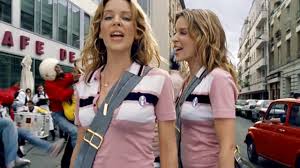
The third and final session concentrated on Distribution, programming & networks with Mark Cosgrove, Cinema Curator of Watershed and Gary Thomas, Co-Director of Animate Projects & Programme Manager for film at the British Council. Cosgrove especially made a great case for the various strands he develops at the Watershed whereas Gary Thomas mainly remains in my memory through his various Kylie Minogue references of which the Michel Gondry one was possibly the best. – http://www.watershed.co.uk; https://www.youtube.com/watch?v=b601_tUuNDM
In other words, the programme could easily have been stretched over two days, as my and others attention span had faded somewhat by this time. Extending over two days would also have justified the rather high entrance fee that was surprising anyway as most of the speakers were representatives of funded organizations and the day was apparently generously supported by various others. What became nevertheless clear is that this symposium was indeed quite useful and that there’s a clear hunger to explore the subject further. The need for various platforms and funding in the Southwest is urgent. Giving a voice to more self-funded local artists and producers for a follow-up session might be a good idea as is stressing the fact that the Southwest is not Bristol on its own but quite a bit bigger.
The Artists and Film symposium was organised and supported by Visual Arts Southwest
 edith doove
Leave a comment