
A project by Youkali and edprojects for Vredeseilanden on change, community and culture.
A collaboration between farmers and artists.
Opening on Sunday 27 June from 3-7pm of the second part of wijheizij on the collaboration of Johan Creten with Koningsmolen and Koen Vanmechelenen with farmer Dirk Draelants.
Please bring something for the buffet. Drinks and dessert are on us if you let us know you are coming.
Adress: Koningsmolen/Kingsmill, Brouwerijstraat 68, Eliksem, Belgium
Opening hours: Sunday 11 July, Sunday 1 August, Sunday 22 August and Sunday 12 September 11:00-16:00, or by appointment.
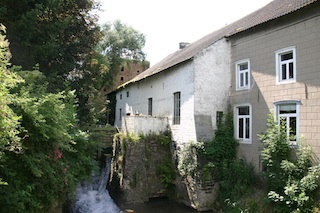
Koningsmolen/Kingsmill
Koningsmolen is a special place where learning, living and working melt together in a unique experience of of being your natural self with others…
The people behind Koningsmolen envision the world as a connected field of unique, beautiful and meaningful organizations and communities that live, share and cultivate their resources consciously.
Koningsmolen is situated with 1,5 hectares of ground: a spacious inner court yard, a permaculture garden, source of peace and food, a meadow, playground for men and animal and a splashing little stream, physical feeding supply for the watermill but also just a lovely place to stay.
Strange Fruit
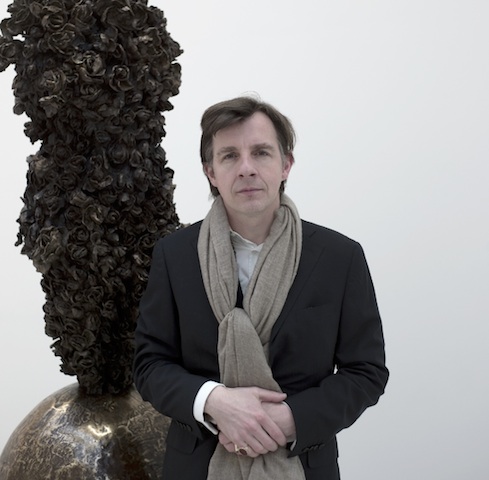
Johan Creten (Sint-Truiden, Belgium, °1963) installs in the inner court of Kingsmill a bronze statue that is as it were a celebration of another view on nature and culture. It is a continuation or reworking of the statue from 1999 “Why does strange fruit always look so sweet?” This figure came about during a working period in Monterrey, Villa de Garcia in Mexico.
The emotions that in the isolation of the Mexican desert lay at the basis of this stature, were described by Creten as follows:
“The stone in his armpit got bigger.
Sometimes it would look blue under the skin when he squeezed it softly and
Then the old fear would come rushing back again making him feel faint.
Dates in Memo’s garden,
Dripping and rich under a thousand flies…
Why does strange fruit always look so sweet?”
Feelings of finiteness, sickness, doubt, fear, and acquiescence are expressed, but also believe and piece. Dripping, metamorphoses, transformation, decay and rebirth also spring to mind. The date is a symbol for immortality and fertility, grace and elegance.
The completely covering of the human figure also recurs in Creten’s torsos in the ‘Oddore di Femmina’ series from 1998. These are completely covered in roses calling forth associations with strong odour and insects, beauty, fragility and decay. The rose petals are in this case razor-sharp and thus vicious.
‘Strange fruit’ in any case stands for fertility and hope. But in the slang of old Harlem the expression “You are strange fruit!” means that you are as good as dead again introducing a coupling of contrasts.
Creten fell under the influence of the enormous amounts of dates that he saw ripening everywhere on the ground. In Mexico he also got acquainted with blue corn that is used for baking pancakes and tortillas. During the opening there will probably also be blue pancakes…
View http://www.galerieperrotin.com/artiste-Johan_Creten-36.html
A wheat field in Eliksem
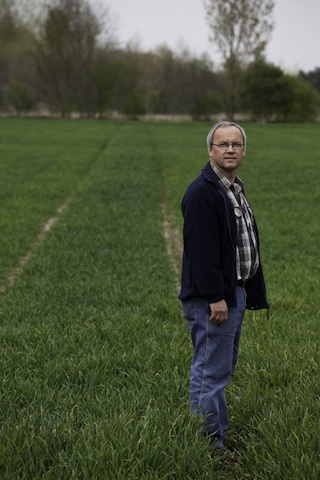
Dirk Draelants is an agricultural farmer. His fields lie in the middle of Eliksem, part of the community of Landen. In this valley of the small river Gete he grows wheat, sugar beet, carrots, peas, corn… In the middle of his wheat field Koen Vanmechelen will plant a construction of 8 meters high. In the meantime the wheat will continue growing, harvest is foreseen in August while the installation stays until September. The wheat field can be easily accessed through the Schabergstraat in Eliksem. It is situated diagonally across from Kingsmill.
Feeding the Cosmopolitan Chicken, 2010
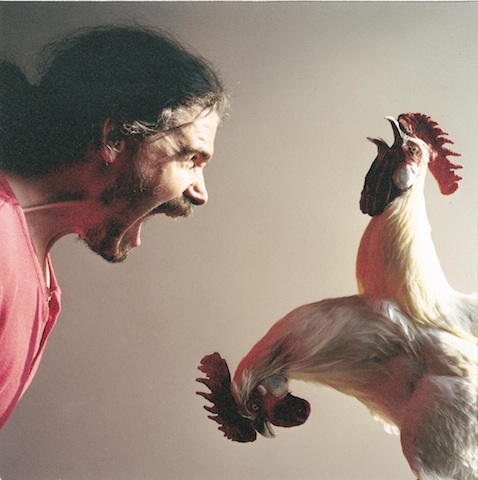
The installation of Koen Vanmechelen (Sint-Truiden, °1965) in the wheat field of Dirk Draelants is inspired by Buddhist praying flags from Tibet that are usually hung in the landscape. Here the flags show the portraits of the chickens that are part of Vanmechelen’s Cosmopolitan Chicken Project. Part of the wheat is meant for these chickens and will this symbolically safeguard the future of this project.
Koen Vanmechelen crossbreeds chickens since 1998 understanding that we need bastards and cross-fertilizing to safeguard our existence. What once started with a crossing between a Belgian Mechelse Koekoek and a French Poulet de Bresse, resulting in a Mechelse Bresse, is today a sizeable ‘oeuvre’ of thirteen generations crossbreeding chickens from all over the world. The central theme of this oeuvre is diversity. This art is permeated by important themes such as genetic manipulation, cloning, globalisation and the multicultural. Vanmechelen’s daring expeditions in the worlds of contemporary science, philosophy and ethics resulted in several internationally renowned projects.
wijheizij…
On several locations in Belgium a farmer and an artists are brought in dialogue with each other to either create an art work or to give space for one. Following the point of departure of the ngo Vredeseilanden, both the farmer and the artist get a central role. Both are at the basis of human activity and survival and decide the future. Without the activity of the farmer, however small, there is no food, no life. He is the basis. The artist has a similar function – she represents her surroundings, interprets it and discovers new possibilities. Both the farmer and the artist supply each in their own way food that is essential to life.
Thanks to family Callewaert: Lieven, Judith, Tim, Amber, Nubi, Noah, Pai, Turo and co-inhabitant Chris, Dirk Draelants, Johan Creten and Koen Vanmechelen.
With the support of Museum M, Leuven
 edith doove
Leave a comment